
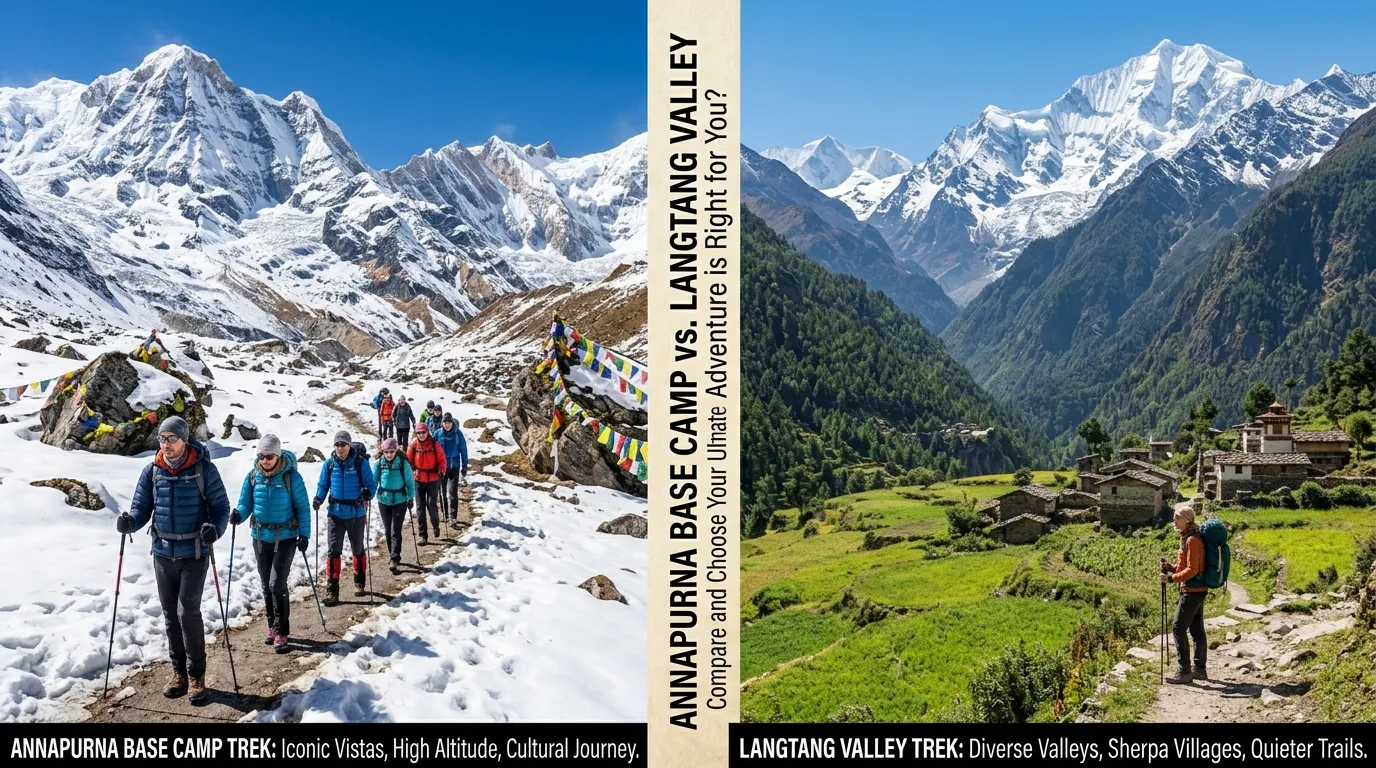
Nepal is home to some of the world’s most spectacular trekking routes, offering breathtaking mountain landscapes, vibrant cultures, and unforgettable outdoor experiences. Among the country’s most popular trekking destinations, the Annapurna Base Camp Trek and the Langtang Valley Trek stand out for their unique scenery, accessibility, and rewarding adventures. While both journeys take trekkers deep into the Himalayas, each offers a completely different experience.
If you’re planning a trekking holiday in Nepal but are unsure which route best suits your interests, this guide compares the Annapurna Base Camp Trek and the Langtang Valley Trek in terms of scenery, difficulty, culture, duration, wildlife, and overall experience.
Why Trek in Nepal?
Nepal attracts thousands of trekkers every year because of its incredible mountain ranges, welcoming local communities, and extensive network of well-established trekking trails. Whether you’re looking for towering snow-capped peaks, peaceful forests, traditional villages, or alpine meadows, Nepal offers something for every adventure enthusiast.
Choosing the right trek depends on your fitness level, available time, and personal preferences.
Overview of the Annapurna Base Camp Trek
The Annapurna Base Camp Trek is one of Nepal’s most iconic trekking adventures. Located within the Annapurna Conservation Area, this trek leads hikers to the base of Annapurna I (8,091 meters), the tenth-highest mountain in the world.
The route passes through charming Gurung and Magar villages, lush rhododendron forests, terraced farmlands, cascading waterfalls, and high alpine landscapes before reaching the spectacular Annapurna Sanctuary.
Highlights
-
Annapurna Base Camp (4,130 m)
-
Machhapuchhre (Fishtail) Mountain
-
Annapurna South
-
Hiunchuli
-
Bamboo forests
-
Natural hot springs at Jhinu Danda
-
Sunrise mountain views
-
Rich Gurung culture
The dramatic mountain amphitheater at Annapurna Base Camp is considered one of the finest viewpoints in the Himalayas.
Overview of the Langtang Valley Trek
The Langtang Valley Trek is often called Nepal’s hidden gem. Located north of Kathmandu near the Tibetan border, this trek offers beautiful mountain scenery with fewer crowds than many other popular trekking routes.
The trail follows the Langtang River through dense forests, traditional Tamang villages, yak pastures, and alpine valleys before reaching Kyanjin Gompa, a peaceful mountain settlement surrounded by towering Himalayan peaks.
Highlights
-
Kyanjin Gompa
-
Langtang Lirung
-
Langshisa Valley
-
Yak cheese factory
-
Tamang villages
-
Glacier viewpoints
-
Kyanjin Ri hike
-
Tserko Ri viewpoint
The trek combines natural beauty with strong Tibetan Buddhist traditions, creating a culturally rich trekking experience.
Mountain Scenery
One of the biggest differences between these two treks is the type of scenery you’ll encounter.
Annapurna Base Camp Trek
The Annapurna Base Camp Trek offers remarkable landscape diversity. Trekkers experience:
-
Rice terraces
-
Bamboo forests
-
Rhododendron forests
-
Deep river valleys
-
Snow-covered mountains
-
High alpine terrain
The final approach to Annapurna Base Camp is particularly dramatic, with towering peaks surrounding trekkers on every side.
Major visible peaks include:
-
Annapurna I
-
Annapurna South
-
Machhapuchhre
-
Hiunchuli
-
Gangapurna
Every day brings changing landscapes, making the journey visually exciting.
Langtang Valley Trek
The Langtang Valley Trek has a quieter and more peaceful atmosphere. Instead of dramatic elevation changes, the valley gradually opens into wide alpine meadows beneath massive glaciers.
Trekkers enjoy views of:
-
Langtang Lirung
-
Dorje Lakpa
-
Yala Peak
-
Ganesh Himal
-
Langtang Ri
The valley is particularly beautiful during spring when wildflowers bloom and in autumn when skies are crystal clear.
Trek Difficulty
Both treks are considered moderately challenging, but there are differences.
Annapurna Base Camp Trek Difficulty
The Annapurna Base Camp Trek involves:
-
Numerous stone staircases
-
Long uphill climbs
-
Daily walking of 5–7 hours
-
Maximum altitude of 4,130 meters
The trail is physically demanding but technically straightforward.
Good physical fitness is generally sufficient for completing the trek successfully.
Langtang Valley Trek Difficulty
The Langtang Valley Trek includes:
-
Gradual elevation gain
-
Less steep terrain
-
Daily walking of 5–6 hours
-
Maximum altitude around 5,000 meters if hiking Tserko Ri
Although the valley itself is easier, optional viewpoint hikes require additional effort.
Overall, many trekkers find Langtang slightly less strenuous than Annapurna Base Camp.
Trek Duration
Time availability often influences trekking decisions.
Annapurna Base Camp Trek
Typical itinerary:
-
7–12 days
-
Flexible route options
-
Can be combined with Poon Hill
-
Extended versions available
Langtang Valley Trek
Typical itinerary:
-
7–10 days
-
Short travel distance from Kathmandu
-
No domestic flights required
For travelers with limited vacation time, Langtang offers excellent convenience.
Cultural Experience
Nepal’s mountain communities are as memorable as its landscapes.
Annapurna Base Camp Trek
The trail passes through traditional villages inhabited by:
-
Gurung people
-
Magar communities
Visitors experience:
-
Stone houses
-
Buddhist monasteries
-
Local farming traditions
-
Warm hospitality
-
Authentic Nepali cuisine
The cultural diversity is impressive throughout the trek.
Langtang Valley Trek
The Langtang Valley Trek introduces visitors to the Tamang people, whose culture has strong Tibetan influences.
Trekkers encounter:
-
Prayer wheels
-
Colorful prayer flags
-
Ancient monasteries
-
Yak herding traditions
-
Buddhist ceremonies
Kyanjin Gompa provides one of Nepal’s most peaceful mountain cultural experiences.
Wildlife and Nature
Both trekking regions lie within protected conservation areas.
Annapurna Region
Wildlife may include:
-
Himalayan monal
-
Musk deer
-
Langur monkeys
-
Himalayan griffons
The forests are especially beautiful during spring when rhododendrons bloom in vibrant shades of red, pink, and white.
Langtang National Park
The Langtang Valley Trek passes through Langtang National Park, home to:
-
Red pandas
-
Himalayan black bears
-
Snow leopards (rare)
-
Himalayan tahr
-
Musk deer
Birdwatchers will also enjoy spotting many colorful Himalayan bird species.
Accommodation
Both treks use traditional teahouses.
Annapurna Base Camp Trek
Accommodation includes:
-
Comfortable lodges
-
Hot meals
-
Shared bathrooms
-
Charging facilities
-
Wi-Fi in many villages
The Annapurna region generally has more developed infrastructure.
Langtang Valley Trek
Teahouses provide:
-
Comfortable rooms
-
Homemade meals
-
Friendly local hospitality
-
Basic facilities
The atmosphere is quieter and more personal compared to busier trekking regions.
Food Along the Trail
Trekkers on both routes enjoy hearty mountain meals.
Popular dishes include:
-
Dal Bhat
-
Fried rice
-
Vegetable noodles
-
Tibetan bread
-
Pancakes
-
Soups
-
Momos
-
Yak cheese
-
Tea and coffee
Langtang is especially known for its locally produced yak cheese at Kyanjin.
Best Time to Trek
Both treks are best enjoyed during Nepal’s two main trekking seasons.
Spring (March to May)
Advantages include:
-
Rhododendron blooms
-
Mild temperatures
-
Clear mountain views
-
Active wildlife
Autumn (September to November)
Benefits include:
-
Stable weather
-
Excellent visibility
-
Comfortable temperatures
-
Dry trails
Winter trekking is possible on both routes but brings colder conditions, while the summer monsoon season often results in muddy trails and reduced visibility.
Accessibility
Annapurna Base Camp Trek
Travel typically involves:
-
Drive to Pokhara
-
Road transfer to the trek starting point
Pokhara also offers many accommodation and sightseeing options before and after the trek.
Langtang Valley Trek
One major advantage is accessibility.
Trekkers simply drive from Kathmandu to Syabrubesi, the trek’s starting point, making logistics straightforward and avoiding domestic flights.
Which Trek Offers Better Mountain Views?
If dramatic Himalayan panoramas are your priority, the Annapurna Base Camp Trek is hard to beat. Standing inside the Annapurna Sanctuary, surrounded by towering snow-covered peaks, is an unforgettable experience.
However, if you prefer peaceful valleys, glaciers, and expansive alpine scenery with fewer crowds, the Langtang Valley Trek provides equally rewarding mountain landscapes in a more tranquil setting.
Who Should Choose the Annapurna Base Camp Trek?
This trek is ideal for travelers who want:
-
Iconic Himalayan scenery
-
Diverse landscapes
-
Comfortable trekking infrastructure
-
Rich village culture
-
Classic Nepal trekking experience
It is particularly suitable for first-time visitors seeking one of Nepal’s signature adventures.
Who Should Choose the Langtang Valley Trek?
The Langtang Valley Trek is perfect for trekkers looking for:
-
Less crowded trails
-
Authentic mountain culture
-
Tibetan Buddhist heritage
-
Shorter travel time
-
Peaceful natural surroundings
-
Excellent value
It appeals to those who enjoy quieter trekking experiences away from the busiest routes.
Can You Trek Both?
Absolutely. Many experienced trekkers return to Nepal multiple times because every region offers something unique.
The Annapurna Base Camp Trek delivers one of the Himalayas’ most famous base camp experiences with spectacular mountain scenery and diverse landscapes. Meanwhile, the Langtang Valley Trek offers serenity, authentic Tamang culture, glacier views, and a more intimate connection with nature.
Rather than competing with each other, these treks complement one another and showcase different sides of Nepal’s remarkable Himalayan beauty.
Conclusion
Choosing between the Annapurna Base Camp Trek and the Langtang Valley Trek ultimately depends on your travel style and expectations. If you dream of standing beneath some of the world’s highest peaks while walking through diverse landscapes and vibrant mountain villages, the Annapurna route is an outstanding choice. If you prefer quieter trails, rich Tibetan-influenced culture, glacier-fed valleys, and a more relaxed trekking experience, Langtang is equally rewarding.
Whichever adventure you choose, you’ll discover why Nepal remains one of the world’s premier trekking destinations. Both journeys offer breathtaking Himalayan scenery, welcoming local communities, unforgettable cultural encounters, and memories that will last a lifetime