
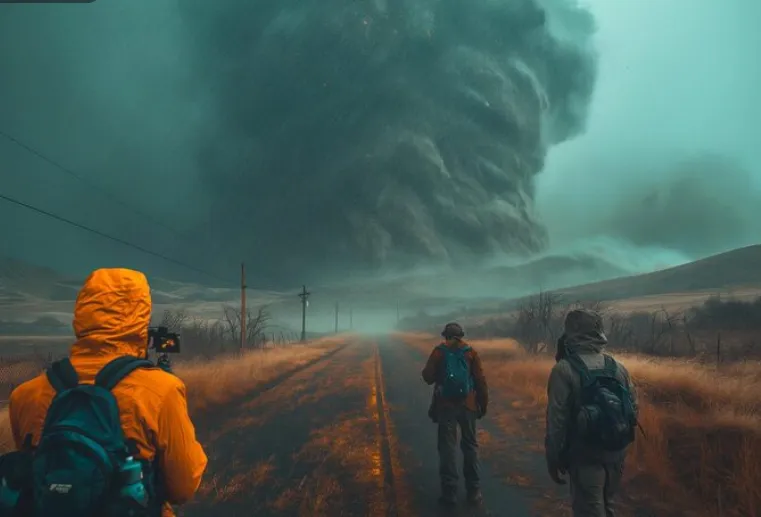
A storm chasing tour cannot follow the type of fixed itinerary used for a conventional vacation. Severe storms develop according to changing atmospheric conditions, not a prearranged sightseeing schedule. The most promising target may be in Kansas during the morning forecast and shift toward Oklahoma, Nebraska or another Plains region as new information becomes available.
Flexible routing allows the chase team to respond to those changes. Instead of remaining near one city or following the shortest road, the group travels toward the area offering the strongest practical opportunity for organized severe weather.
Forecasts Continue Changing During the Day
Each chase day begins with a weather briefing and a review of the latest conditions. The team studies where moisture, instability, lift and changing winds may combine to support severe thunderstorms.
The initial target is an informed starting point, but it is not a final destination. Storms may develop earlier or later than expected, and another region may begin showing stronger potential.
The official FAQ explains that the team frequently adjusts its target area because the atmosphere remains dynamic. This adaptability is a normal part of storm chasing rather than a sign that the original forecast was unsuccessful.
The Best Storm May Not Be the Closest Storm
A dark cloud near the vehicle is not automatically the best storm to follow. The team must consider its structure, movement, road access and potential to remain organized.
A more distant storm may offer clearer visibility or better positioning. Another may be hidden by heavy rain, surrounded by poor roads or moving into an area with limited viewing options.
Flexible routing helps the team compare several possibilities instead of committing too early to one storm. Guides can leave a weakening target and travel toward another storm when current conditions support the decision.
Road Networks Affect Chase Decisions
Meteorological potential is only one part of choosing a route. The team must also determine whether suitable roads provide access to the storm.
A promising target may become less practical when:
-
Roads do not continue in the storm’s direction
-
Heavy rain affects visibility
-
Hail covers the preferred approach
-
Flooding blocks a route
-
Trees or buildings obstruct the view
-
Traffic makes repositioning difficult
Open prairie regions are often preferred because they provide clearer views and more practical road options. The company states that its tours focus heavily on areas with open land and limited tree cover.
Repositioning Protects the Viewing Opportunity
Once the group reaches a developing storm, the route may continue changing. A supercell can turn, strengthen or become surrounded by precipitation within a relatively short period.
The team may move only a few miles between observation stops while trying to maintain a useful view. At other times, a larger repositioning may be needed to remain ahead of the storm or reach another road.
Guests should return to the vehicle promptly when guides announce that it is time to leave. Remaining at one location for an additional photograph can reduce the group’s ability to reach the next viewing point efficiently.
Hotel Locations Must Remain Flexible
Storm chasing tours do not necessarily return to Wichita every evening. The group may finish a chase several hours from the original base and stay in a town that provides better access to the next day’s forecast target.
This mobile accommodation structure reduces unnecessary travel. Returning to the same hotel every night could place the group far from the next promising setup and require additional morning driving.
Hotel information is organized around the chase route, allowing the team to begin each new day from the area where the previous day ended.
Guests Should Expect Route Changes
Travelers should not join a storm chasing tour with a list of specific states, towns or attractions they expect to visit. The weather controls the route.
A typical day may include:
-
A morning forecast briefing
-
Travel toward an initial target
-
A change in direction after updated weather data
-
Time waiting for storms to develop
-
Several short repositioning moves
-
Travel to a different overnight town
This uncertainty is part of the experience. Guests may see places they would never include in a normal road trip, but those destinations cannot be promised in advance.
Tour 6 as an Example of Flexible Routing
Tour 6 begins with arrival in Wichita on June 12, 2027, followed by six chase days from June 13 through June 18.
Its official description explains that the route may extend from traditional chasing areas near Oklahoma into Nebraska and locations farther north as the storm season shifts. This wide potential area shows why the package cannot operate with one fixed road plan.
Tour 6 includes transportation, fuel, forecast experts, guides and drivers, weather forecast briefings, five hotel nights during the active chase and a guaranteed window seat.
Conclusion
Flexible routing is essential because storm chasing depends on rapidly changing weather, practical road access and the movement of developing storms.
The team may adjust the target before storms form, change roads during an active chase or select a different overnight town to prepare for the next day.
Guests who accept this flexibility can better appreciate the complete experience. Instead of expecting a fixed itinerary, they can follow the forecast, observe professional decisions and travel wherever the strongest practical storm opportunity develops.